GFLP, NYU Co-Host Youth Film Festival in NY for World Oceans Day


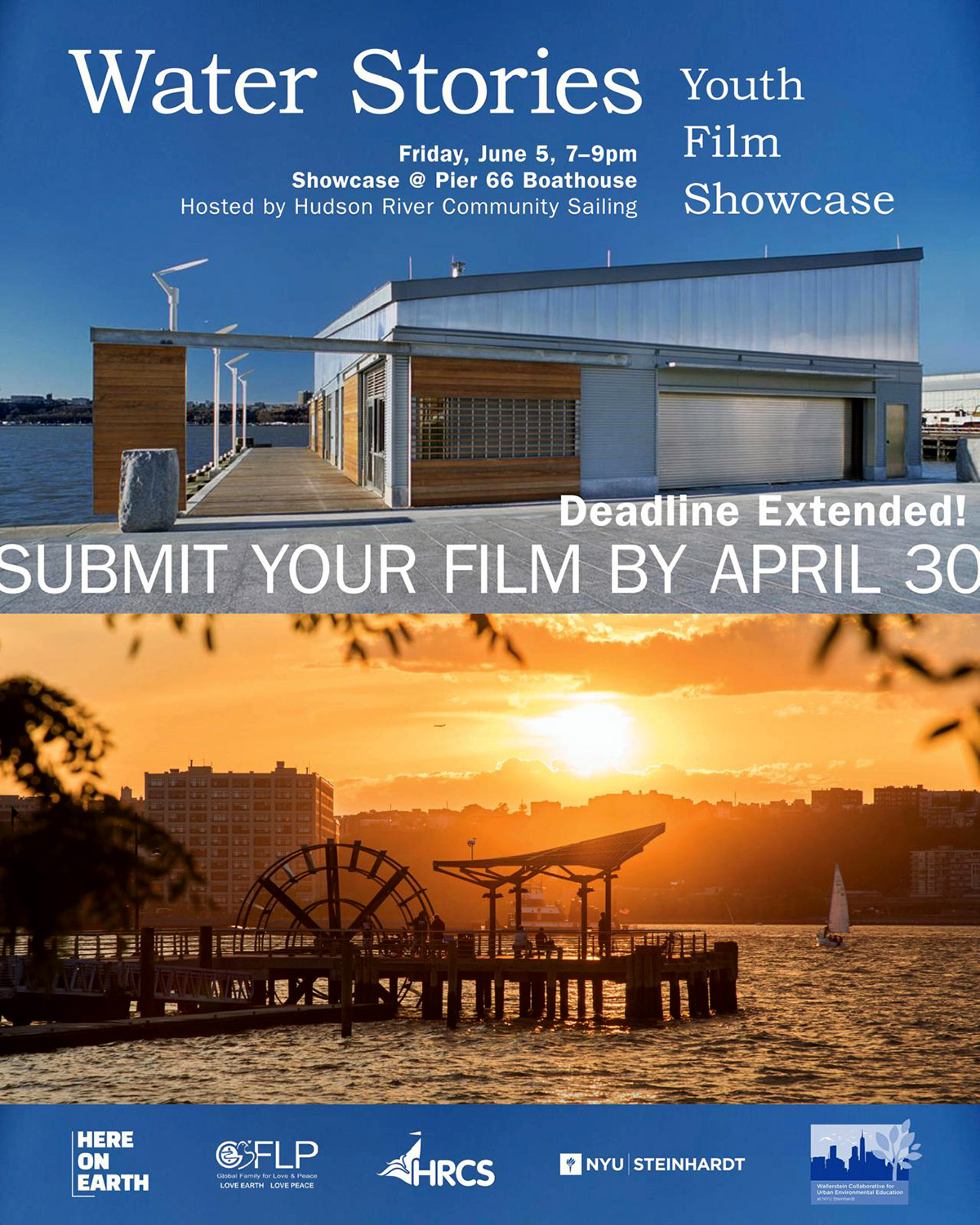
June 8 marked the United Nations' World Oceans Day. "Water Stories," a youth film showcase presented by LJM’s Global Family for Love and Peace (GFLP) in partnership with New York University (NYU), recently opened at the Pier 66 Boathouse along the Hudson River. As evening approached, the sunset shimmering across the water enveloped the riverside screening in a poetic ambiance. The 16 featured films, selected from a global pool of 194 submissions, offered multi-dimensional perspectives on the profound bonds linking humanity with water, the oceans, and the environment.
The event drew around 70 attendees, featuring a heartwarming mix of three-generation families, groups of proud relatives and friends cheering on the young filmmakers, and teachers accompanied by their students. Together, they gathered to witness this inspiring cinematic celebration themed around water and the environment. By using film as a bridge for generational and cultural exchange, the riverside screening not only showcased youth creativity but also embodied the true spirit of environmental education and grassroots advocacy.
Empowering Youth Creativity Through Voting, Protecting Oceans Through Commitment
The "Climate! Film! Action!" youth environmental media initiative, driven by LJM’s Global Family for Love and Peace (GFLP), partnered with New York University this year to launch the youth ocean film festival themed "Water Stories." The event invited young filmmakers from diverse cultural backgrounds to share their memories, emotions, and concerns regarding water, allowing global perspectives to converge along the Hudson River. Through the creation and exchange of visual stories, the initiative hopes to plant the seeds of ecological mindfulness on school campuses, inspiring more youth to engage with sustainability issues.
Before the screening began, audience members were invited to sign the "Ocean Pledge," writing down their own action declarations to safeguard water resources, rivers, and coasts, and to protect marine life—ensuring that their environmental concern extended far beyond the theater walls. To support local New York creators, this year's festival introduced a special "Audience Choice Award." Attendees voted for their favorite works by local filmmakers, with the top prize winner earning a unique experience: a scenic sailing trip along the Hudson River.
Lu Chih-Lan, Education Director at GFLP, noted that the new award was introduced this year not only to encourage local youth filmmaking but also to enhance the audience's sense of involvement, ensuring their voices were heard. She added that 2026 marked their inaugural partnership with Hudson River Community Sailing. The center’s long-standing dedication to guiding youth closer to the ocean through marine environmental education and sailing training aligns perfectly with GFLP’s mission to promote environmental education. In addition to hosting the event, the center sponsored the Audience Choice Award package—the exclusive sailing experience on the Hudson River.
The Audience Choice Award went to Jackson, a student from Hunter College High School, for his film "Why Is Swimming So Hard?" This film based on his personal experience, the documentary chronicles his psychological journey from a childhood fear of water to finally learning how to swim. With a humorous and self-deprecating tone, the film captures the helplessness and struggles of facing peer teasing during the learning process. Delivered through an intimate internal monologue, the storytelling deeply struck a chord with the audience, earning it the highest number of votes.
From Deserts to Oceans:Youth Filmmaking Illuminates Hope and the Future
Vietnamese American filmmaker Dani won the "Most Impactful Water Story" in the youth category (age 18-26), with the work "Enshrine." The film follows a young girl, Isa, and a robotic bird named SUN-E, who guard an ancestral monument. A sudden catastrophe shatters their peaceful existence. In the aftermath of the storm, SUN-E plays a message left by their ancestors: "The world may be broken right now, but our efforts and struggles will never be in vain. The sun will rise tomorrow, and so will we." Through these words that transcend time and space, the film powerfully conveys hope and resilience in the face of environmental crises.
The Best Creative Film Award in the youth category went to Jeanne from Quebec, Canada. Her work, "Fluide," centers on the core theme that "running water is free and fluid, much like gender itself." The film employs minimalist blue and red lines to depict the male physique and female symbolism. Through simplistic coloring and the rhythmic interplay of light and shadow, it elegantly presents the unbridled essence of gender and the elegance of blurring boundaries.
The Best Film Award in the teenage category(age 14-18) went to Akshita's documentary "Paani" ("water" in Hindi). The film focuses on the desolate Thar Desert in Rajasthan, India, chronicling survival stories reshaped by extreme water scarcity. It realistically captures the daily lives of desert families, for whom walking long distances to fetch water remains the most critical responsibility for women and young children. As one interviewee bluntly stated, "Water today is hope tomorrow," underscores the decisive impact of water resources on local survival. Fortunately, as engineers drilled nearly 152 meters (500 feet) underground, they successfully tapped into drinkable groundwater—completely transforming the village's future and rekindling hope for its residents.
From Lenses to Dialogues: Post-Screening Exchanges Extend the "Water Stories"
Following the screening, filmmakers, their production teams, and the audience, and panel judges gathered to exchange impressions and creative journeys. Tim, an audience member, asked the filmmakers whether their relationship with water had changed after completing their projects. Sydney, creator of "Water is Everything," shared that the filmmaking process forged a deeper emotional bond with water, prompting her to rethink the human-water relationship through both environmental and philosophical lenses. Akshita, director of the best film "Paani," added that her on-location filming experience profoundly heightened her awareness of water scarcity, sharpening her realization that the future of humanity is inextricably linked to this vital resource.
As the last frame of light and shadow faded, marking the conclusion of the screenings and dialogues, the reflections sparked by these films continued to reverberate. On the banks of the Hudson River, filmmakers and the audience shared their deeply felt impressions, allowing diverse life experiences to intertwine once more through dialogue. Ultimately, the vital questions raised about the environment, memory, and the future left a lasting echo in the hearts of all who attended.
The event drew around 70 attendees, featuring a heartwarming mix of three-generation families, groups of proud relatives and friends cheering on the young filmmakers, and teachers accompanied by their students. Together, they gathered to witness this inspiring cinematic celebration themed around water and the environment. By using film as a bridge for generational and cultural exchange, the riverside screening not only showcased youth creativity but also embodied the true spirit of environmental education and grassroots advocacy.
Empowering Youth Creativity Through Voting, Protecting Oceans Through Commitment
The "Climate! Film! Action!" youth environmental media initiative, driven by LJM’s Global Family for Love and Peace (GFLP), partnered with New York University this year to launch the youth ocean film festival themed "Water Stories." The event invited young filmmakers from diverse cultural backgrounds to share their memories, emotions, and concerns regarding water, allowing global perspectives to converge along the Hudson River. Through the creation and exchange of visual stories, the initiative hopes to plant the seeds of ecological mindfulness on school campuses, inspiring more youth to engage with sustainability issues.
Before the screening began, audience members were invited to sign the "Ocean Pledge," writing down their own action declarations to safeguard water resources, rivers, and coasts, and to protect marine life—ensuring that their environmental concern extended far beyond the theater walls. To support local New York creators, this year's festival introduced a special "Audience Choice Award." Attendees voted for their favorite works by local filmmakers, with the top prize winner earning a unique experience: a scenic sailing trip along the Hudson River.
Lu Chih-Lan, Education Director at GFLP, noted that the new award was introduced this year not only to encourage local youth filmmaking but also to enhance the audience's sense of involvement, ensuring their voices were heard. She added that 2026 marked their inaugural partnership with Hudson River Community Sailing. The center’s long-standing dedication to guiding youth closer to the ocean through marine environmental education and sailing training aligns perfectly with GFLP’s mission to promote environmental education. In addition to hosting the event, the center sponsored the Audience Choice Award package—the exclusive sailing experience on the Hudson River.
The Audience Choice Award went to Jackson, a student from Hunter College High School, for his film "Why Is Swimming So Hard?" This film based on his personal experience, the documentary chronicles his psychological journey from a childhood fear of water to finally learning how to swim. With a humorous and self-deprecating tone, the film captures the helplessness and struggles of facing peer teasing during the learning process. Delivered through an intimate internal monologue, the storytelling deeply struck a chord with the audience, earning it the highest number of votes.
From Deserts to Oceans:Youth Filmmaking Illuminates Hope and the Future
Vietnamese American filmmaker Dani won the "Most Impactful Water Story" in the youth category (age 18-26), with the work "Enshrine." The film follows a young girl, Isa, and a robotic bird named SUN-E, who guard an ancestral monument. A sudden catastrophe shatters their peaceful existence. In the aftermath of the storm, SUN-E plays a message left by their ancestors: "The world may be broken right now, but our efforts and struggles will never be in vain. The sun will rise tomorrow, and so will we." Through these words that transcend time and space, the film powerfully conveys hope and resilience in the face of environmental crises.
The Best Creative Film Award in the youth category went to Jeanne from Quebec, Canada. Her work, "Fluide," centers on the core theme that "running water is free and fluid, much like gender itself." The film employs minimalist blue and red lines to depict the male physique and female symbolism. Through simplistic coloring and the rhythmic interplay of light and shadow, it elegantly presents the unbridled essence of gender and the elegance of blurring boundaries.
The Best Film Award in the teenage category(age 14-18) went to Akshita's documentary "Paani" ("water" in Hindi). The film focuses on the desolate Thar Desert in Rajasthan, India, chronicling survival stories reshaped by extreme water scarcity. It realistically captures the daily lives of desert families, for whom walking long distances to fetch water remains the most critical responsibility for women and young children. As one interviewee bluntly stated, "Water today is hope tomorrow," underscores the decisive impact of water resources on local survival. Fortunately, as engineers drilled nearly 152 meters (500 feet) underground, they successfully tapped into drinkable groundwater—completely transforming the village's future and rekindling hope for its residents.
From Lenses to Dialogues: Post-Screening Exchanges Extend the "Water Stories"
Following the screening, filmmakers, their production teams, and the audience, and panel judges gathered to exchange impressions and creative journeys. Tim, an audience member, asked the filmmakers whether their relationship with water had changed after completing their projects. Sydney, creator of "Water is Everything," shared that the filmmaking process forged a deeper emotional bond with water, prompting her to rethink the human-water relationship through both environmental and philosophical lenses. Akshita, director of the best film "Paani," added that her on-location filming experience profoundly heightened her awareness of water scarcity, sharpening her realization that the future of humanity is inextricably linked to this vital resource.
As the last frame of light and shadow faded, marking the conclusion of the screenings and dialogues, the reflections sparked by these films continued to reverberate. On the banks of the Hudson River, filmmakers and the audience shared their deeply felt impressions, allowing diverse life experiences to intertwine once more through dialogue. Ultimately, the vital questions raised about the environment, memory, and the future left a lasting echo in the hearts of all who attended.